A process that is hard to specify
Work with users to uncover the rules and exceptions while delivering small, useful improvements.
 Let’s talk
Embedded engineering & delivery
Some problems are hard to hand over in a brief. We work alongside your team, learn the process in its real setting and build the application, automation or integration with the people who will use it.
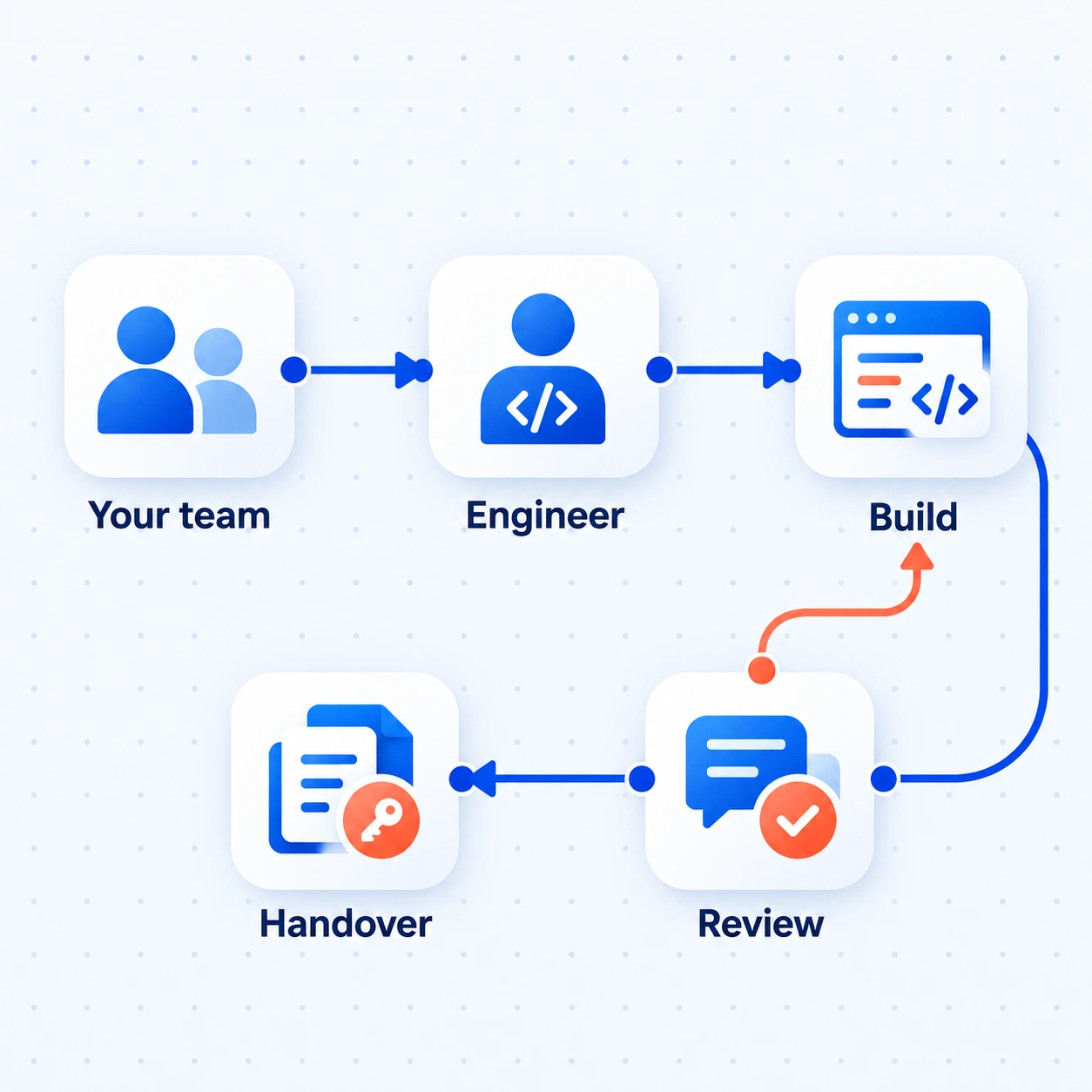
Your team and engineer build, review and improve together, then hand over working software and the knowledge behind it.
Illustrative engagement · Working arrangements agreed togetherHow we deliver this service
We agree a delivery outcome and working counterpart, observe real tasks and build from a shared backlog. Your users review small working changes as new rules emerge, while technical review, testing and knowledge transfer stay part of delivery.
We combine operational understanding with hands-on application and automation delivery. Working close to your users keeps their examples connected to implementation decisions. A shared backlog makes the effect of a new requirement visible before the next increment.
See our delivery processSee the work
Illustrative example · sample data, not client results.
An order-review screen looks complete until a coordinator shows how one purchase order can have several delivery dates. That detail was absent from the brief.
The engineer works through the example with the coordinator, changes the proposed record structure and shows the revised screen to the technical owner. The backlog records the change and its priority.
The next increment can represent split deliveries, with review notes and tests explaining the rule. The team sees what changed and chooses what to build next.
Step 1 of 3
This illustrates an engagement style. Working capacity, availability and remote or on-site collaboration are confirmed before an engagement.
Where it helps
Work with users to uncover the rules and exceptions while delivering small, useful improvements.
Bring the model, data, interface and system connections together with the people who will operate them.
Work alongside your technical counterpart on a defined delivery outcome, with review and knowledge transfer built in.
What’s included
Discovery and engineering stay connected through a shared backlog, regular user feedback and working releases.
Observe daily tasks and inspect difficult examples. Keep the people with business context involved in technical decisions.
Turn the outcome into small changes, prioritised with your owner. Record what new findings mean for the next release.
Develop in the chosen environment with senior technical review, realistic tests and frequent user feedback.
Introduce releases with users and document decisions, code or configuration, operating responsibilities and remaining work.
What you receive
Users can complete the agreed workflow, changes have been reviewed and tested, and the receiving team can find the code or configuration, operating notes and outstanding backlog.
The first conversation
We’ll discuss the outcome, the people who hold the context and how often the work needs feedback. This establishes whether embedded delivery fits better than a defined project handoff.
The next decision: the initial delivery responsibility, collaboration model and scope needed to discuss an engagement.
Useful answers
Application development describes what is delivered. Forward deployed engineering describes how we work: close to users, discovering and building together. The output can be an app, automation or integration.
The engagement centres on a delivery responsibility and shared backlog. We define capacity, decision ownership, collaboration and handover together.
It means close involvement with the customer’s work. Remote collaboration and any on-site work, location, overlap and travel are agreed for the engagement.
You need an available business owner and access to system owners. We can assess collaboration with your engineers, providers or technical counterpart.
Use an initial backlog, working capacity and review points. New findings lead to visible priority or scope decisions before the next increment.
Let’s talk about your work
Bring the problem that is difficult to capture in a brief.
What we’ll discuss ↑← All services